What Happens to Your Car After Junk Car Removal?
Discover what happens to your car after junk car removal, from reusable parts and fluid handling to scrap metal recovery and vehicle recycling.
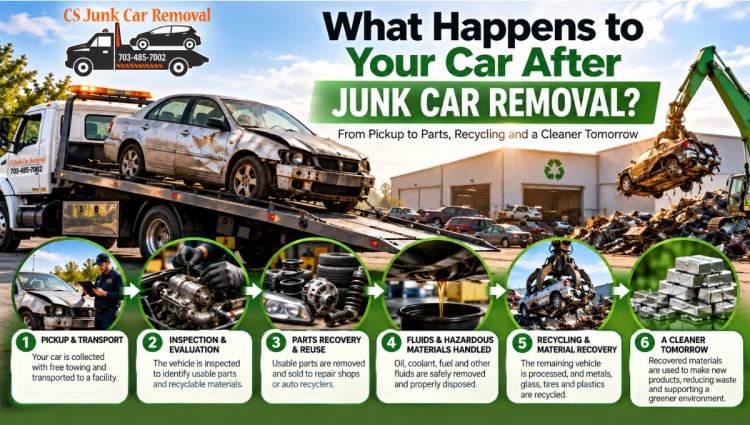
Have you ever wondered what happens to your old car after a junk car removal service takes it away? Does it go straight to a scrapyard, get repaired and sold, or become something entirely different?
The answer depends on the vehicle’s condition, the value of its usable parts, and the recycling process used by the buyer or processing facility. Even a car that no longer runs may contain valuable components and recyclable materials.
Understanding what happens after junk car removal can help you make an informed decision when it is time to get rid of an unwanted vehicle. At CS Junk Car Removal, the process gives vehicle owners a convenient way to clear unwanted cars while potentially receiving cash for them.
Let’s explore the journey a junk car may take, from pickup to parts recovery and recycling.
1. The Vehicle Is Collected and Transported
The process begins when you accept an offer and schedule a pickup. A junk car removal provider arranges transportation for your vehicle, whether it is old, damaged, wrecked, or no longer running.
The vehicle does not need to be roadworthy to be removed. Depending on its condition and location, a tow truck or suitable recovery vehicle can transport it safely.
Before pickup, it is a good idea to:
-
Remove personal belongings from the glove compartment, trunk, and under the seats.
-
Take out toll tags, parking permits, and personal documents.
-
Remove your license plates if required by your state’s rules.
-
Gather the vehicle title and any requested ownership documents.
-
Confirm the agreed payment and towing arrangements.
CS Junk Car Removal offers free vehicle pickup, helping customers avoid arranging and paying for separate towing. You can learn more about its junk car removal services.
2. The Vehicle Is Inspected and Evaluated
Once the vehicle reaches its destination, it may be inspected to determine its condition and identify components that could be reused, resold, or recycled.
The evaluation may consider:
-
The engine and transmission
-
Body panels, doors, and other exterior parts
-
Wheels and tires
-
Alternator, starter, and other mechanical components
-
Electronic equipment and interior parts
-
The vehicle’s metal content
A car that looks worn out may still have functional parts. For example, a vehicle with serious engine damage might have undamaged doors, mirrors, wheels, or electronic components that can be useful elsewhere.
The inspection also helps determine whether the vehicle is suitable for parts recovery, further resale, or scrap processing.
3. Usable Parts May Be Removed and Reused
One important stage of the junk car recycling process is recovering components that still have value.
Some vehicles are dismantled so that usable parts can be sold to repair shops, auto recyclers, or people repairing similar models. Reusing a suitable part can help another vehicle owner find a replacement without buying a brand-new component.
Depending on the car’s condition and market demand, recoverable items may include:
Engine and transmission components
If they are functional and suitable for reuse, certain engine or transmission parts may be recovered.
Body and interior parts
Doors, mirrors, seats, bumpers, and other components may be reusable if they are in acceptable condition.
Electrical components
Alternators, starters, wiring, and selected electronic components may have resale or recovery value.
Not every component will be suitable for reuse. Safety-critical parts, damaged components, and items that cannot be reliably tested may be rejected.
For vehicle owners, the key takeaway is that a junk car can have value beyond its scrap metal.
4. Fluids and Hazardous Materials Are Handled
Cars contain fluids and materials that should not be released into the environment. Before a vehicle is crushed or processed for metal recovery, appropriate facilities typically remove and manage substances that could cause contamination.
These may include:
-
Engine oil and transmission fluid
-
Coolant and brake fluid
-
Fuel remaining in the tank
-
Refrigerants from the air-conditioning system
-
Batteries and other components requiring special handling
Proper handling matters because leaking automotive fluids can contaminate soil and water. Batteries and certain electronic components also require appropriate processing rather than ordinary disposal.
The exact procedures depend on the facility, vehicle type, and applicable environmental requirements. This is one reason responsible vehicle processing is preferable to abandoning a car or dismantling it without suitable equipment.
5. The Remaining Vehicle Is Processed for Recycling
After reusable components and relevant materials have been recovered, the remaining vehicle may be sent through a recycling process.
A vehicle contains several materials, including steel, aluminum, copper, glass, rubber, and plastics. Processing facilities separate and recover materials where practical.
Metal recovery
Steel and aluminum are among the most valuable recyclable materials in many vehicles. After appropriate preparation, the vehicle’s metal structure may be shredded or otherwise processed, and the resulting materials are separated for recovery.
Recovered metals can then enter manufacturing supply chains, where they may be used to produce new metal products.
Tires, glass, and plastics
Tires, glass, and plastics can follow different recovery or disposal routes depending on their condition, local infrastructure, and available recycling markets.
Not every material can be recycled economically, and some waste may still require disposal. However, recovering usable parts and recyclable metals can reduce the amount of vehicle material that goes directly to landfill.
Read more about the step-by-step process of recycling your junk car to understand how recycling contributes to vehicle end-of-life management.
6. Some Vehicles May Be Resold or Repaired
Not every vehicle collected through a junk car removal service is immediately dismantled.
A car that is unwanted by its current owner may still be repairable, or it may contain components that make it worthwhile for resale or refurbishment. The decision depends on its mechanical condition, damage, age, repair costs, and market demand.
For example, a vehicle with a relatively minor mechanical issue may have a different future from one that has suffered extensive fire damage.
If repair or resale is not practical, parts recovery and scrap processing may be more suitable. The final destination varies, so it is best not to assume that every removed vehicle follows exactly the same path.
If your vehicle no longer starts, our guide on what to do with a car that doesn’t run explains the options you can consider before arranging removal.
7. Responsible Removal Benefits Vehicle Owners and the Environment
Getting rid of an unwanted vehicle can offer practical benefits beyond reclaiming space in your driveway.
Less clutter: Removing an unused car frees up space in your garage, driveway, or yard.
Potential cash payment: Depending on the vehicle and the offer, you may receive money for a car that is no longer useful to you.
Parts recovery: Suitable components may help keep other vehicles running.
Material recovery: Recycling metals and other recoverable materials can reduce waste and the need for some newly extracted raw materials.
Convenience: Professional pickup can save you the effort of transporting a vehicle that cannot be driven.
For more information about the benefits of a professional service, read how junk car removal can save time and hassle.
How Does CS Junk Car Removal Help?
At CS Junk Car Removal, customers can request a quote for unwanted vehicles, including cars that are old, damaged, burned, or no longer running. The company advertises free towing and cash offers for eligible vehicles.
The process starts by sharing details about your vehicle and its condition. Once you receive and accept an offer, pickup arrangements can be discussed with the team.
Before the vehicle is collected, confirm the agreed payment, required ownership documents, and any local steps needed to complete the transfer. Keep a record of the transaction and follow the applicable requirements for reporting the sale or transfer of the vehicle.
To learn more about the company, visit the CS Junk Car Removal website or review its company information and services.
Frequently Asked Questions
1. What happens to a car after junk car removal?
Depending on its condition, a removed car may be inspected for reusable parts, repaired or resold, dismantled, or processed for scrap metal recycling. Fluids and other materials requiring special handling should be managed appropriately.
2. Are junk cars always crushed after pickup?
No. Some vehicles contain usable parts or may be suitable for repair or resale. Crushing or shredding may happen later if the vehicle is sent for scrap processing, but the exact route depends on its condition and destination.
3. Can parts from a junk car be reused?
Yes. Suitable components such as certain body panels, wheels, mechanical parts, and electrical components may be recovered and reused. Their condition, safety, compatibility, and market demand determine whether reuse is practical.
4. Is junk car recycling good for the environment?
Recovering usable parts and recyclable metals can reduce waste and conserve resources. Environmental benefits depend on proper handling of automotive fluids, batteries, refrigerants, and other materials, as well as the recycling methods used.
5. Does CS Junk Car Removal offer free towing?
CS Junk Car Removal advertises free pickup for eligible vehicles. Confirm the details of your offer and pickup arrangements with the company before scheduling your removal.
Ready to Get Rid of Your Unwanted Car?
Your old vehicle may still have value, even if it no longer runs. Through parts recovery, resale, and material recycling, a junk car may have a useful next chapter after it leaves your property.
If you are ready to clear space and explore an offer for your unwanted vehicle, contact CS Junk Car Removal to discuss your options.
CS Junk Car Removal
Phone: (703) 485-7002
Email: Csjunkcarremoval@gmail.com
Address: 9151 Liberia Ave, Manassas, VA 20110
Website: https://csjunkcarremoval.com/
Request a quote today and find out how easy it can be to arrange junk car removal with free towing.
What's Your Reaction?